

Which New MTG Sets are a Good Sealed Buy?
Sealed Magic has become harder to evaluate because the pricing structure has changed.
Recent premium releases, notably Universes Beyond sets, are no longer built around broad set depth or a wide spread of valuable cards. In my opinion, Wizards of the Coast is leaning into a “high-risk, high-reward” model: a very small number of extremely scarce cards at the top of each set that’s anchored by an invisible nostalgia price premium (say that five times fast) using intellectual property as a driver.
In other words, they take beloved franchises and put a mega-chase card at the top.
The result is a sealed market where value is concentrated and outcomes vary widely depending on how that structure is balanced.
“In other words, they take beloved franchises and put a mega-chase card at the top.“
To understand what sets are good buys in the sealed MTG market, we’re breaking down the last four releases: Avatar: The Last Airbender, Marvel’s Spider-Man, Edge of Eternities, and Final Fantasy—specifically on the cards anchoring their value today and how that will affect their sealed prices in the future.
Key takeaways:
- Sealed performance is defined by floor support, not just ceiling. Sets like Edge of Eternities and Avatar hold up better because playable staples and lands establish durable price floors beneath their headline chases.
- Single-card dependency increases volatility. Spider-Man offers an enormous ceiling, but its reliance on The Soul Stone makes sealed value highly sensitive to the poor sentiment. Chase cards also act as somewhat of a floor for sealed boxes.
- Intellectual Property (IP) strength makes sealed product expensive, but worth it. Final Fantasy benefits from nostalgia buoyed by serialized chocobos, surge foils, and limited collector box availability—creating long-term sealed pressure similar to Lord of the Rings Collector Boxes.
- Sealed MTG is a patience play. The strongest outcomes favor buyers with a two-year or longer horizon as boxes exit the market and scarcity and a strong cohort dropping $$$ to open cards on camera.
Avatar: The Last Airbender
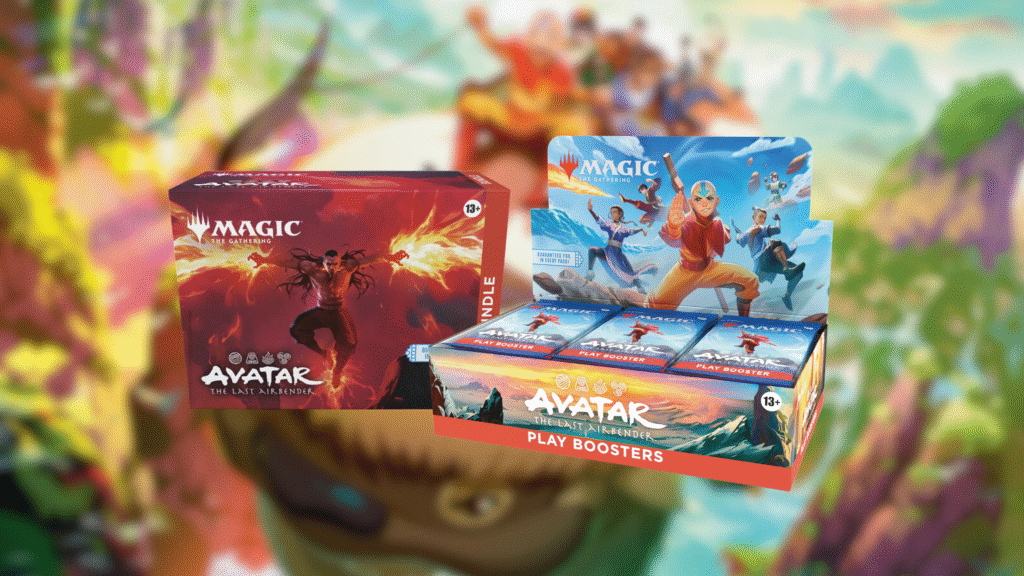
At first glance, Avatar’s sealed value is defined by a narrow premium ceiling, but the set also benefits from real gameplay demand across several formats.
At the top end, Raised Foil Aang is the defining chase, supported by Neon Ink variants of Aang, Toph, and Katara. These cards are scarce by design and real collector items for people who love the show. The treatments are gorgeous, too (that doesn’t hurt).
Other cards like Badgermole Cub and Wan Shi Tong have found sustained homes in Commander and Standard. Although, Standard dominance is not the best dock for your boat in terms of long-term value. Earthbending and to a lesser extent, firebending, seem to be excellent mechanics with some real staying-power across formats.
Price snapshot (TCGplayer and Ebay)
Card | Current | Monthly Trend |
Avatar Aang – Raised Foil | ~$3,000 | Large drop from release, stabilization around $3,000 |
Toph, the First Metalbender – Neon Ink | ~$565 | Down from release with limited sales in the $560 range. Most recent sale at $510 via Ebay. |
Badgermole Cub – Borderless Foil | ~$75 | Down from release but seems to be establishing a floor at $75 |
Wan Shi Tong – Borderless Foil | ~$95 | Seven sales around $100, lowest listing on TCGplayer is $95. Establishing a floor at $95 |
With this set being the latest release, price crashes are inevitable. The headliner cards were sliced in half (Aang Raised Foil and Neon Ink variants) but the staples like Badgermole and Wan Shi Tong are building a base.
At around $350 per Collector Box, Avatar sits at a reasonable entry point with a mix of chase headliner cards and playable staples. If you can snag Avatar collector boosters for $350 a box, this set is a screaming buy.
Marvel’s Spider-Man
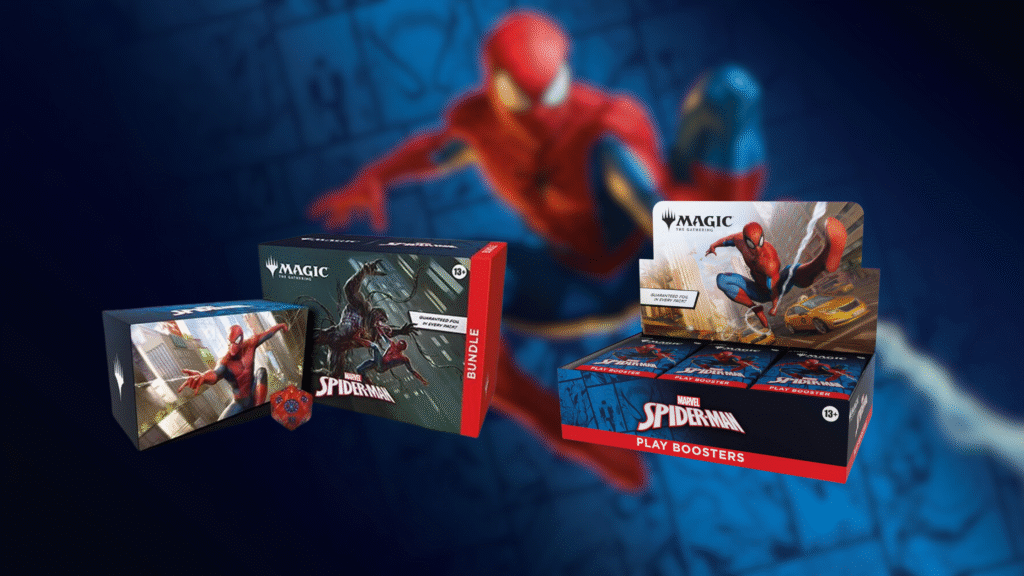
Spider-Man is structurally the simplest set in this group.
Nearly all meaningful value is concentrated in a single card: The Soul Stone.
The Cosmic variant trading around $28,000 and the Borderless version around $1,200 define the set’s ceiling. Outside of those outcomes, there is very little secondary value designed to carry sealed openings.
Price snapshot (TCGplayer and Ebay)
Card | Current | Recent Trend |
The Soul Stone – Cosmic | ~$28,000 | Illiquid / strong support from IP and future sets |
The Soul Stone – Borderless | ~$1,250 | Down from about $1,500 in early December. Price floor established |
The Soul Stone – Regular | ~ $50 (regular) ~$70 (foil) | Price floor established, anecdotally, this is a very tough pull. |
Negative sentiment around the Spider Man has put pressure on sealed pricing, and that matters here more than anywhere else. This product is compelling, despite Spider Man being a small, ugly set, due to upcoming Marvel releases and the insane price ceiling on the Soul Stone.
When Lorwyn hits the market, I think we’ll see further price cuts on Spider-Man Collector Boxes. This was a product, post Final Fantasy, that has a LOT of bagholders—people who bought in at the outrageous prerelease prices (e.g., $800 a box).
At around $310 I’d nibble on this set, with an all-out buy around $290. Not because the set is good, but because there are tailwinds in the form of the Marvel release along with the Soul Stone being a very good card.
Edge of Eternities
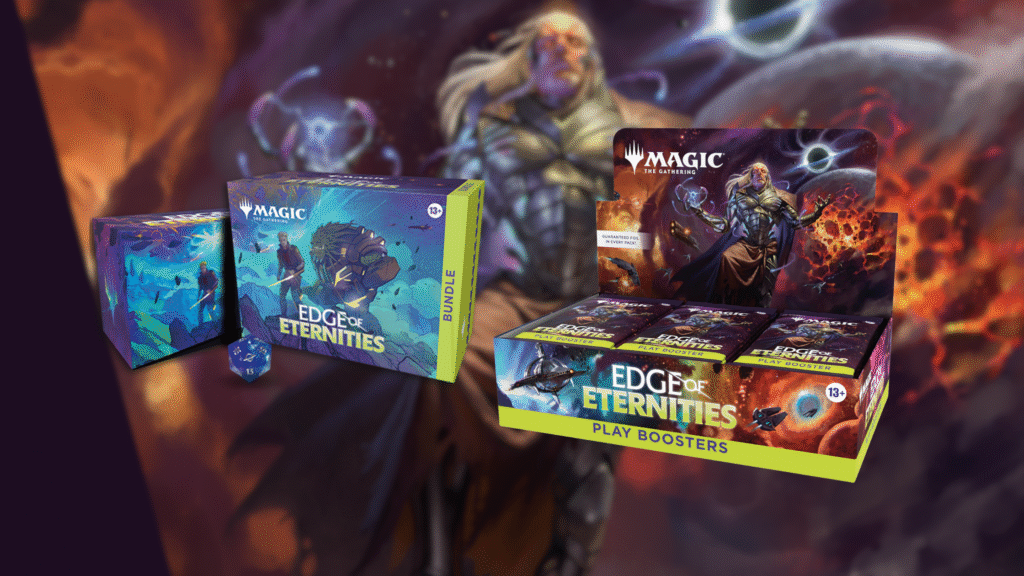
Edge of Eternities stands out because its value is anchored to cards players already want to own and play. You can see this in the rapid price appreciation post release. In September I loaded up when these dropped to $340. Now, you’ll struggle to find a box under $400.
The backbone of Edge is premium land treatments. Galaxy Foil versions of Ancient Tomb, Gemstone Caverns, and Mana Confluence all command strong prices and are tied to lands with long histories of demand across Commander and eternal formats.
Edge also benefits from genuine gameplay relevance. Quantum Riddler, trading around $40, has seen real Standard play, while Ouroboroid, around $40, sees steady Commander play with some Standard adoption in green shells.
Price snapshot (TCGplayer and Ebay)
Card | Current | Recent Trend |
Ancient Tomb – Galaxy Foil | ~$250–340(two galaxy foil variants) | Lots of buying on the $250 version, not so much on the $330. |
Gemstone Caverns – Galaxy Foil | ~$140–230 (two galaxy foil variants) | Seeing buying pressure on both variants |
Quantum Riddler | ~$42 | Massive demand in Standard format |
Ouroboroid | ~$42 | Massive demand across formats |
Edge of Eternities is well-positioned to continue its ascent due to beautiful land reprints and multi-format playability. Collector boxes are sitting around $415 at the time of writing. I believe this set will continue to appreciate in value over time, but not as rapidly as others.
The backbone of Edge is premium land treatments. Galaxy Foil versions of Ancient Tomb, Gemstone Caverns, and Mana Confluence all command strong prices and are tied to lands with long histories of demand across Commander and eternal formats.
Edge also benefits from genuine gameplay relevance. Quantum Riddler, trading around $40, has seen real Standard play, while Ouroboroid, around $40, sees steady Commander play with some Standard adoption in green shells.
Final Fantasy
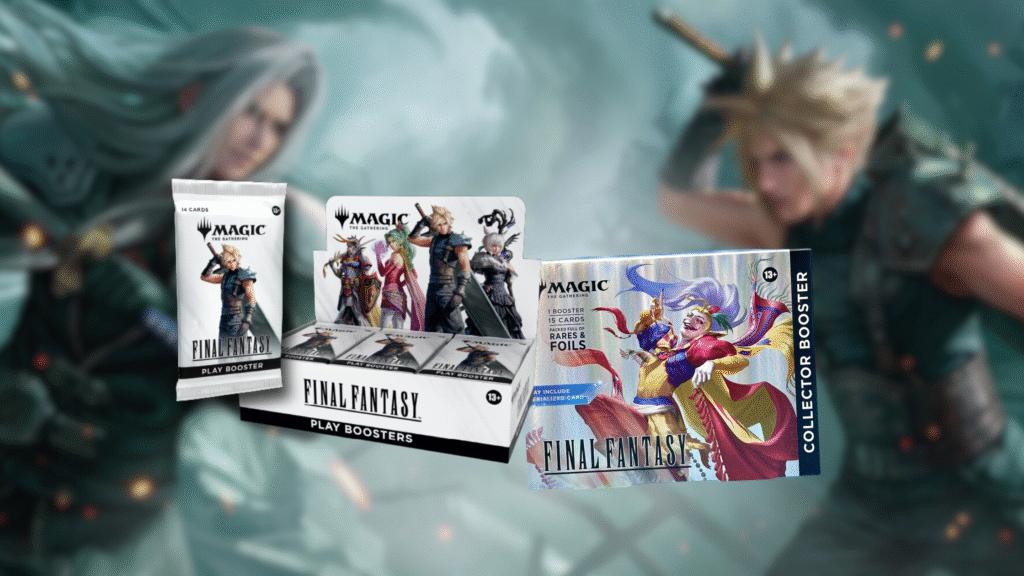
Final Fantasy represents Wizards of the Coast (now Hasbro owned) operating confidently at the top of the premium market.
Surge Foil characters like Sephiroth, Cloud, and Y’shtola define the ceiling, with prices in the $250–500 range depending on the card. Supporting that layer is a meaningful inclusion of Special Guest (reprints with special treatments from other sets) like Rhystic Study and several other Commander staples.
Price snapshot (TCGplayer and Ebay)
Card | Current | Recent Trend |
Chocobo Serialized | Recent sales are between $50k – $78k | Not many sales across platforms like eBay and TCGplayer since the fees would be outrageous. These are likely moving through private sales and personal meetups. |
Chocobo Neon | $900-3,000 based on the variant | These have lost from $500-1000 in value each since release, but have held very steady around the 1.5k – 2k price range. The data is fragmented due to different grades and variations. |
Sephiroth – Surge Foil | ~$475 | Hype uptick after launch with stabilization happening in the high $400s |
Rhystic Study – Special Guest | ~$400 | Dropped since opening from roughly $480 and I expect this to settle around $300. The art is an iconic FF scene, but recent scene cards are highly pixilated and there are much prettier versions of this card available already (confetti foil)—in my opinion. |
Buster Sword – Borderless | ~$66 | Slow decline to this level with 36 sales going into 2026 – strong support for this floor |
At current sealed prices, much of this strength is already priced in, but the big chases, nostalgia factor, difficult-to-reprint cards like Buster Sword, and limited availability of surge foils will continue to buoy this set.
As we saw with the Lord of the Rings collector boosters, there’s a serious appetite for breakers, speculators, AND collectors for premium IP. With the chance of hitting serialized and neon ink chocobos among very beautiful surge foils this set has a ton going for it. Also, a $66 borderless buster sword doesn’t hurt, either.
If this dips below $1,000 again, it’s a screaming buy. Even at these levels, we’ve seen a similar set in Lord of the Rings appreciate to $1,300 a box. Given more time, these will become more rare in their sealed form—offering premium long-term hold opportunities.
The Bottom Line – What MTG Collector Boxes Are Worth Buying?
Across these four sets, the same structure is visible: scarcity at the top, familiarity through IP, and selective use of playable cards to support the market underneath. The differences in sealed performance come down to how well those elements are balanced.
Collector Boxes today aren’t priced around averages. Their value is determined by how effectively a set balances ceiling and floor—and whether the sealed price reflects that balance. Out of this list, several of them are pretty good buys—but Final Fantasy and Avatar: The Last Airbender are a step above the rest. Depending on your bankroll to buy and hold these products sealed, each offers an opportunity at a different price point.
In terms of sell opportunities, massive spikes don’t generally happen, they grind up in value as more and more boxes leave the market. A minimum two-year time horizon should be built into your investing decision.
Good luck and if you happen to buy sealed product remember what the Notorious B.I.G. said, “Never get high on your own supply.” KEEP THEM SEALED!
Leave a Reply